
Most businesses assume their utility bills are accurate simply because they arrive on a predictable schedule from a regulated source. That assumption is worth questioning. Utility bills are complex documents — generated from automated systems, multiple data sources, and pricing structures that vary by rate class, season, and contract terms. Errors happen more often than most business owners expect, and they rarely get caught unless someone is specifically looking for them.
A utility bill audit is the process of reviewing those bills systematically to identify errors, overcharges, and opportunities for cost reduction. For many businesses, it’s one of the simplest ways to recover money that’s already being overspent — without changing suppliers, equipment, or operations.
What Is a Utility Bill Audit?
A utility bill audit is a detailed review of a business’s electricity, gas, or combined utility bills over a defined period [typically 12 to 24 months] to identify discrepancies between what’s being charged and what should be charged based on actual usage, contract terms, and applicable rates.
The audit process examines several layers of the bill simultaneously:
- Rate verification. Confirming that the rate applied to the bill matches the rate specified in the business’s current contract or applicable tariff. Rate misapplication — billing at the wrong tier, classification, or contract rate — is one of the most common errors found in commercial utility audits.
- Meter reading accuracy. Checking whether billed consumption aligns with actual meter readings. Estimated readings, meter malfunctions, and data entry errors can all result in bills that don’t reflect true usage.
- Fee and charge review. Verifying that fees, surcharges, and pass-through charges are correctly calculated and actually applicable to the business’s account. Some charges are tied to specific conditions that may no longer apply.
- Demand charge calculation. For businesses on demand-based rate structures, confirming that peak demand charges are calculated correctly based on actual usage patterns rather than estimated or default values.
- Contract compliance. Ensuring the supplier is billing in accordance with the terms of the signed contract — correct rate, correct contract length, and no unauthorized changes to pricing structure.
→ How Hidden Energy Contract Terms Are Costing Businesses Thousands
Why Utility Billing Errors Happen
Utility billing is largely automated, processing millions of accounts through systems that combine meter data, rate tables, and contract terms. With that scale comes a meaningful error rate — not due to negligence, but simply because complex automated systems make mistakes, and most go uncorrected unless flagged.
Common sources of billing errors include:
Estimated readings that don’t match actual usage. When a meter can’t be physically read [due to access issues, equipment malfunction, or scheduling] utilities often bill based on an estimate. If the estimate is inaccurate and never corrected with an actual reading, the business may be overpaying or underpaying for an extended period.
Rate class misclassification. Businesses can be billed under the wrong rate class, for example, a general commercial rate when a more favorable industrial or time-of-use rate applies. This kind of error can persist for years without detection.
Contract rate not properly applied. When a business switches suppliers or renegotiates a contract, the new rate needs to be correctly entered into the billing system. Mistakes in this transition can result in bills that reflect the old rate, an incorrect rate, or inconsistent rates across billing periods.
Outdated account information. Changes in square footage, equipment, or operational hours that affect rate eligibility may not be reflected in billing if the utility or supplier isn’t notified.
Duplicate or erroneous charges. Less common but not rare, duplicate meter charges, fees for services no longer in use, or charges that belong to a different account entirely.
How Common Are Utility Billing Errors?
Industry estimates on commercial utility billing error rates vary, but audits conducted across diverse commercial portfolios consistently surface errors in a meaningful percentage of accounts reviewed — particularly for businesses with complex rate structures, multiple meters, or accounts that have gone several years without review.
The financial impact of an individual error is often modest on a monthly basis — a few percentage points of overcharge — but compounds significantly when left uncorrected over 12, 24, or 36 months. A business overpaying by just 4% on a $2,500 monthly electricity bill loses $1,200 per year to an error that a routine audit would catch immediately.
What a Utility Bill Audit Can Recover
When a utility bill audit identifies an error, the financial recovery typically falls into one of two categories:
Retroactive credits. Many utilities and suppliers will issue credits for verified billing errors going back a defined period — often 12 to 24 months, depending on jurisdiction and the specific utility’s policies. A confirmed rate misclassification or meter reading error can result in a meaningful one-time credit applied to the account.
Ongoing savings. Beyond the retroactive correction, fixing the underlying error prevents the overcharge from continuing. A business that corrects a rate misclassification doesn’t just recover past overpayment — it stops paying the inflated rate going forward, compounding the benefit over time.
Utility Bill Audit vs. Supplier Rate Comparison: What’s the Difference?
These two processes are related but distinct, and understanding the difference helps clarify what each one addresses.
A utility bill audit examines whether you’re being billed correctly according to your existing contract and applicable xrates. It answers the question: “Is my supplier or utility charging me what they’re supposed to, based on the agreement already in place?”
A supplier rate comparison examines whether your existing contract itself is competitive relative to the broader market. It answers the question: “Is the rate I agreed to still the best available option?”
A business can have a perfectly accurate bill — no errors, no misclassifications — while still being on a contract rate that’s no longer competitive. Conversely, a business could be on a competitive contract rate but still experiencing billing errors that inflate what they actually pay.
The most thorough approach to utility cost reduction addresses both: verify that billing matches the contract, and verify that the contract itself reflects current market rates.
→ How to Compare Business Energy Suppliers and Find a Better Rate
How to Conduct a Basic Utility Bill Review Yourself
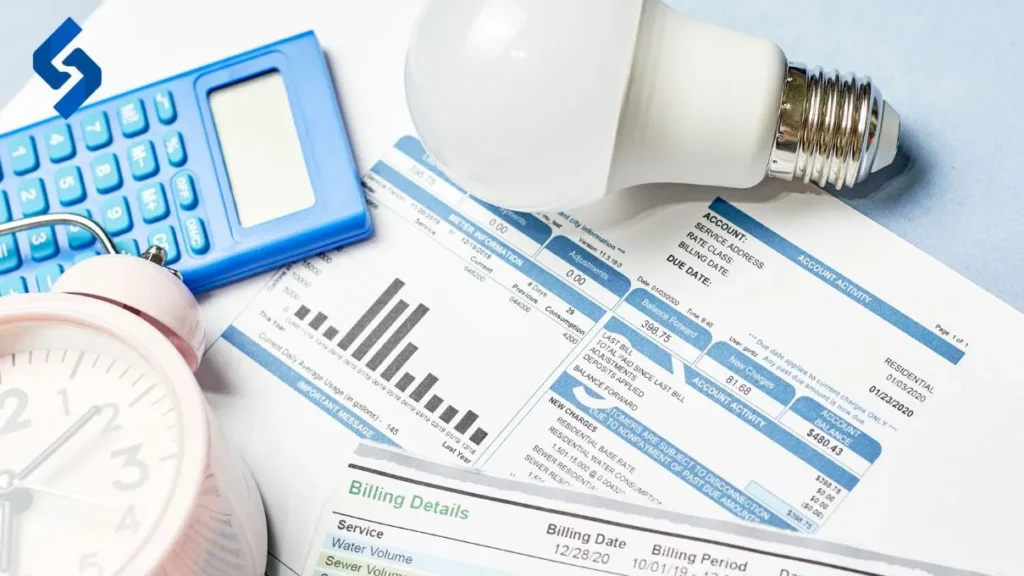
While a comprehensive audit benefits from professional review, business owners can identify some red flags on their own:
Compare month-over-month consumption. Pull 12 months of bills and chart usage in kWh or therms. Look for unexplained spikes or drops that don’t correspond to known operational changes.
Verify the rate matches your contract. Check the rate per kWh or per therm on your bill against the rate specified in your current supply contract. Any mismatch deserves an immediate call to your supplier.
Look for “estimated” notations. Many utility bills indicate when a reading is estimated rather than actual. Track how often this occurs — frequent estimates increase the chance of inaccurate billing.
Review fees and surcharges line by line. Identify every separate charge on the bill and confirm you understand what it’s for. Unfamiliar or unexplained charges warrant a question to your utility or supplier.
Check your rate classification. Confirm that your account is billed under the correct commercial rate class for your business type and consumption level. If you’ve changed operations, equipment, or square footage since your account was set up, your classification may be outdated.
The Bottom Line
A utility bill audit addresses a different but equally important question than supplier comparison: not just “is my rate competitive?” but “am I even being billed correctly for the rate I have?” For businesses that have never reviewed their bills in detail, the answer is sometimes no — and the financial impact of correcting that can be immediate.
The most effective utility cost reduction strategy combines both: an audit to verify billing accuracy, and a supplier comparison to verify rate competitiveness. Together, they ensure a business isn’t overpaying through either mechanism.
→ What Is Utility Cost Reduction and How Does It Work?
Get a Free Energy Cost Analysis
While SpendWizer’s core analysis focuses on supplier rate comparison, the process naturally surfaces information relevant to billing accuracy as well — since our analysts review your current bill in detail as part of the comparison.
Upload your electricity or gas bill and we’ll provide a clear picture of your current rate, your contract terms, and whether a better supplier option exists — within 24 to 48 hours, at no cost, with no obligation.
Upload your bill for a free analysis →
Frequently Asked Questions
How far back can a utility billing error be corrected?
This varies by utility and jurisdiction, but many allow corrections and credits going back 12 to 24 months from when the error is identified and reported. Some cases allow for longer look-back periods depending on the nature of the error.
How long does a utility bill audit take?
A focused review of 12 to 24 months of bills can typically be completed within a few days to a couple of weeks, depending on the complexity of the account and the number of meters or locations involved.
Does requesting an audit risk my relationship with my utility or supplier?
No. Reviewing your own billing history and requesting clarification or correction of errors is a standard and routine practice. Utilities and suppliers have processes in place specifically to handle these requests.
Is a utility bill audit the same as a supplier rate comparison?
No — they address different questions. An audit verifies billing accuracy against your existing contract. A rate comparison verifies whether your existing contract is competitive against the broader market. Both contribute to a complete utility cost reduction strategy.
Related reading:
- Energy Cost Savings for Businesses: A Complete Guide
- What Is Utility Cost Reduction and How Does It Work?
- Energy Procurement Services: What They Are and Why Your Business Needs One
- How Hidden Energy Contract Terms Are Costing Businesses Thousands
- How to Compare Business Energy Suppliers and Find a Better Rate
SpendWizer provides independent commercial energy cost analysis for businesses across the United States. Upload your bill and we’ll tell you whether a better rate exists — at no cost and with no obligation.